
THE GAME PLAZA
SPLITSCREEN STEALTH EXPERIENCE
INTRODUCTION
I wanted to challenge myself to create a semi-realistic co-op experience by creating scenarios where players must work together to solve problems and escape the mall.
PROJECT DETAILS
Developed: over 4 weeks half-time
Engine: Unreal Engine 5.2
Template & Asset packs:
Jakup Iwals, Blockout Starter pack
Overview
.png)
The world is set in a post-apocalyptic mall in Virginia, USA, during the early 2000s. Two people from different backgrounds and values aim to reach the legendary bunker, Eden's Gate. Rumor has it that an individual who knows its location is being held hostage at The Game Plaza Mall.
The players must work together to rescue them from their captors, known as the Survivors. Survivors have a reputation of shooting first and then asking questions. Par this with yesterday's undead attack on the mall, making the soldiers extra alert.
Story
Design walkthrough
ACT-1 Reach The Plane

Players can explore the mall's top floor without encountering any enemies. I did this to help the players understand their characters.
In addition, the players don't know where to go; they only know they need to get to the plane. They have to explore and find clues on how to progress.

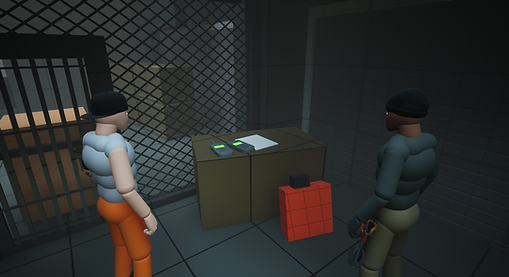
The players explore and find a gas can and two walkie-talkies, which allow them to communicate over greater distances.
While there, the players look through the fence wall and see a box blocking the door from the other side. I wanted to foreshadow the future path.
In the meantime, one of the players has to carry the gas can back to the generator.
After powering the generator, the players can pull a lever to open the garage door. But there is a catch: the garage door only opens halfway, allowing only one player to enter.
I wanted to introduce the croutch mechanic while also splitting up the players' building tension.
Act 2 - Adding Difficulty

When creating this section, I wanted to implement an unexpected event that would raise tension.
I created a garage door with two levers, making players believe they must work together to open it.
There is also a box nearby that the player can push.
The player will think they must push the box back to the start to be able to hold up the door for the second player. While pushing the box, the floor collapses, forcing the player to jump down.
I wanted a situation where the players need to communicate via the walkie-talkie.
By keeping the gas can hidden from the player on the ground floor, the player with high prospects can use their walkie-talkie to call out, "Hey, it's by the blue car."
The blue car has now become a point of interest for the players.

_edited.png)
AREA 1
To challenge players and emphasize communication, I made Area 2 harder by:
-
Adding a second enemy. Players now have to track two moving threats instead of one.
-
Increasing the distance between covers requires players to be more careful when moving, as longer gaps expose them to greater danger.
AREA 2


After completing both stealth areas, I wanted to relieve tension by making the player on the ground walk up the stairs and move the box to allow the other player through.
In addition, I wanted to add a story beat by having dead zombies lying on the other escalators, showcasing the aftermath of yesterday's attack.
ACT 3 - NEW ENEMY


Talking with the Scientist
They tell the players that the soldier who had the key to the cell was last seen entering the clothing store yesterday, but he never returned.
"You need to find the key and bring it back. Watch out; there might still be listeners inside the store." The players pick up two flashlights and a gas can.
I wanted to build tension: Is the soldier alive?
How many listeners are there? If any?
Players fill the generator and pull two levers to open the garage door.
Inside, it’s pitch dark; flashlights are needed. As both players enter the store, the garage door slams shut behind them.
A faint clicking sound echoes from the next room.

CLOTHING SHOP

The Listener is extremely sensitive to sound and will actively seek out the source. If they get close enough, they will attack.
Players need to be careful and use a flashlight to communicate with each other. For example, they can blink the flashlight or whisper to each other.

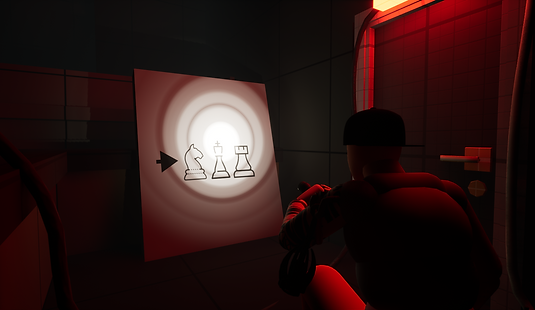
There is a whiteboard by the door leading to the key.
Three chess symbols and an arrow pointing to the right are on the whiteboard.
The players remember seeing a chess symbol earlier by the red lever.
Hinting that they need to pull the levers in a specific order.
The symbols are hidden around the movie store, each close to its corresponding lever.


To deepen player agency, I repurposed the box mechanic.
Players can now move boxes to block listeners' paths, allowing the players to control enemy movement and strategically alter the level layout.
It's also important to note that the boxes make sounds, which could distract a listener if one player is trying to find a symbol.
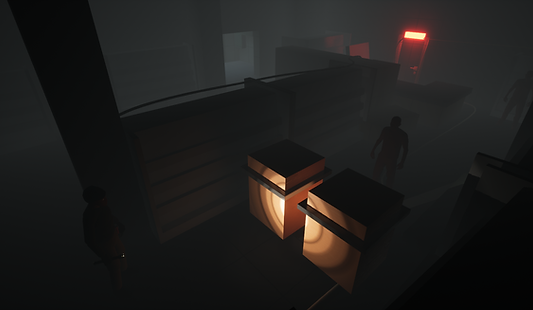

After successfully adjusting all the levers in the correct order, the player can reach the staff room, where they will find the soldier dead with a key.
After the players take the key, they move toward the exit and return to Owen.
THE END

BEHIND THE SCENE

CREATING CO-OP IN IWALS
It took 1 week to set up, and it allows one player to play via a controller and another to use a keyboard and mouse.
While trying to get it to work, I contacted Mina Mirhosseini and Max Forsberg, former students and a teacher at The Game Assembly.
Mina made one of her portfolio pieces using Iwals with Co-op Mechanics, which inspired me to attempt to create a co-op experience, seeing that it was possible.
She advised me to contact Max about creating the co-op functionality in Iwals. I contacted Max and got some advice on how to make it work, which helped.
I was greatly inspired by Mina Mirhosseini's portfolio piece, particularly her design of a co-op space and her thought processes.
I started the same way she did with bubble design. I cut up some paper and tried to get a visual overview of how a co-op event could play out.
It was really helpful and got me in the right mindset. After I had written down some ideas, I took them to Miro, where I created a flowchart.

Blocking out
When creating the blockout, I created an exact copy of my old reference photo but with the caveat of keeping the same scale as my previous design.
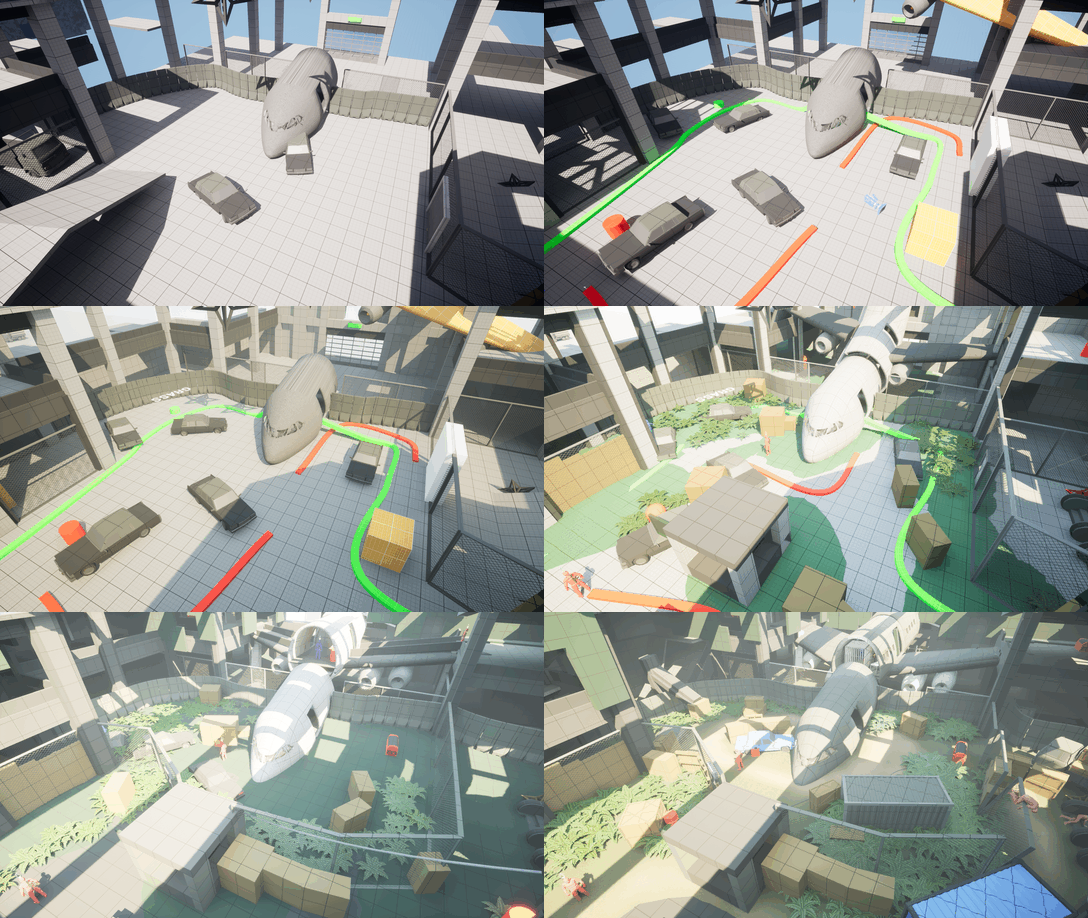
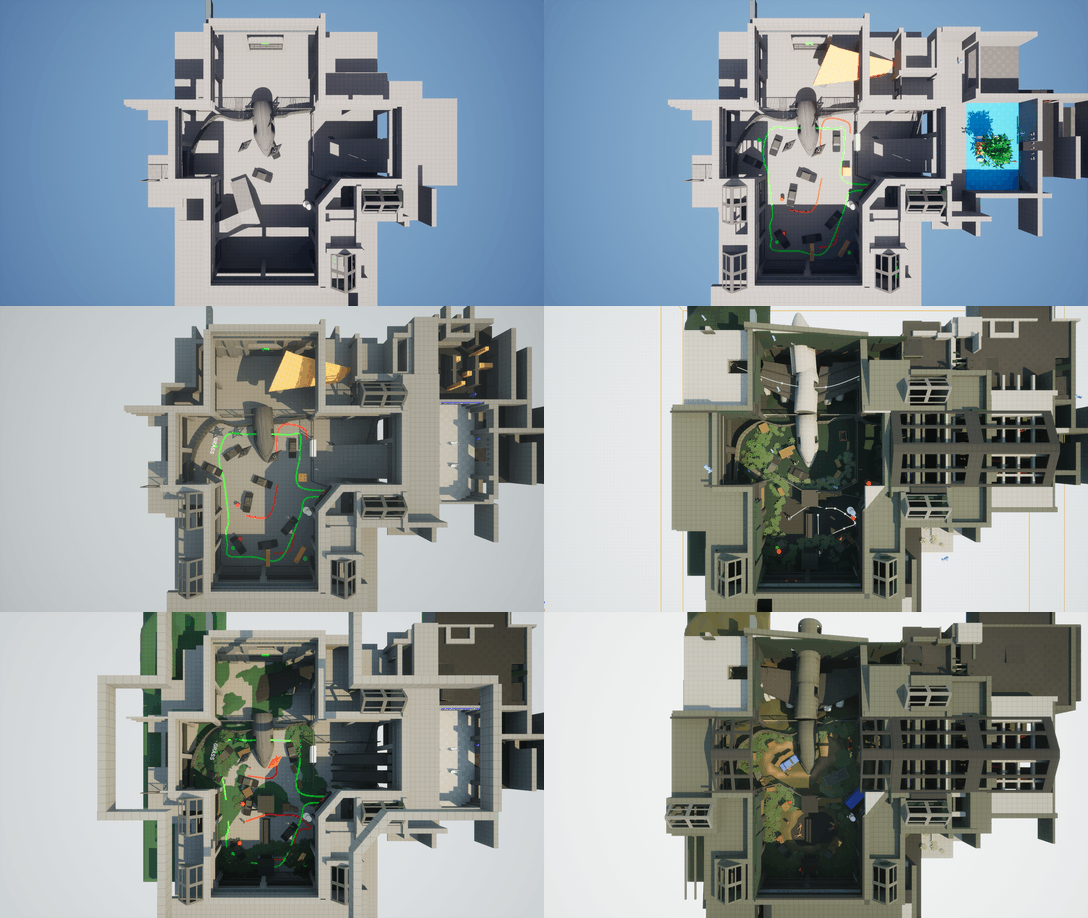
REFERENCES & mock-up scene
I dug up my old references while also finding new ones that fit the architecture and the world I was building.
When it came to creating a mock-up area in my level, one of my graphical artist group members recommended that I try it to get a better idea of what the graphical standard should be in the rest of the level.
I would design an area and make sure that the detail was similar to my mock-up area, creating a nice artistic flow throughout the level.

Ki-Sho-Ten-Ketsu is a Japanese narrative structure. when followed, can create a natural progression. It has four phases:
-
Ki (Introduction): Introduce core mechanics or themes in a simple setting.
-
Sho (Development): Expand with added complexity or variations.
-
Ten (Twist): Introduce an unexpected challenge that subverts expectations.
-
Ketsu (Conclusion): Resolve the twist and deliver a satisfying conclusion.


Reflection
Playtesting:
I didn't get much playtesting done as i would like due to the need for 2 players but i managed to get some playtesting done which was helpful. I learned from my previous piece not to playtest too early in development, which gave me better results and allowed me to iterate on the level while also keeping my original vision.
If I had two more weeks:
I would iterate more on the last area. It would be even cooler if the player could use the boxes to reach greater heights or expand on the box mechanics of blocking Listeners' pathways.
A puzzle in which soldiers try to enter the store. The players could use the boxes and sound to lure some listeners to the entrance and then block their path back so that when the soldiers open the door, they get swarmed by enemies.
To summerise
Working on this project has been a blast. It was the project I had the most fun creating. It was refreshing to create a co-op experience after wanting to do it for so long. I could also apply the lessons I learned from the previous portfolio piece, and it truly allowed me to work so much more efficiently.
Thank you so much for reading. I wish you a truly fantastic day!