
THE FACILITY
CALL OF DUTY AND WOLFENSTEIN INSPIRED LEVEL
INTRODUCTION
The level's objective is to reach the general's office inside the tower. The player has to fight their way there, dealing with enemies and using their double-jump to reach vantage points to attack them.
Unique selling point
-
The player has access to a double-jump mechanic, which allows them to reach new heights and adds complexity to combat.
PROJECT DETAILS
Developed: over 6 weeks, half-time
Engine: Unreal Engine 5.4
Template & Asset packs:
Low Pollyshoter, Blockout Starter pack
OVERVIEW


DESIGN WALKTHROUGH
ACT 1 - ELEVATOR

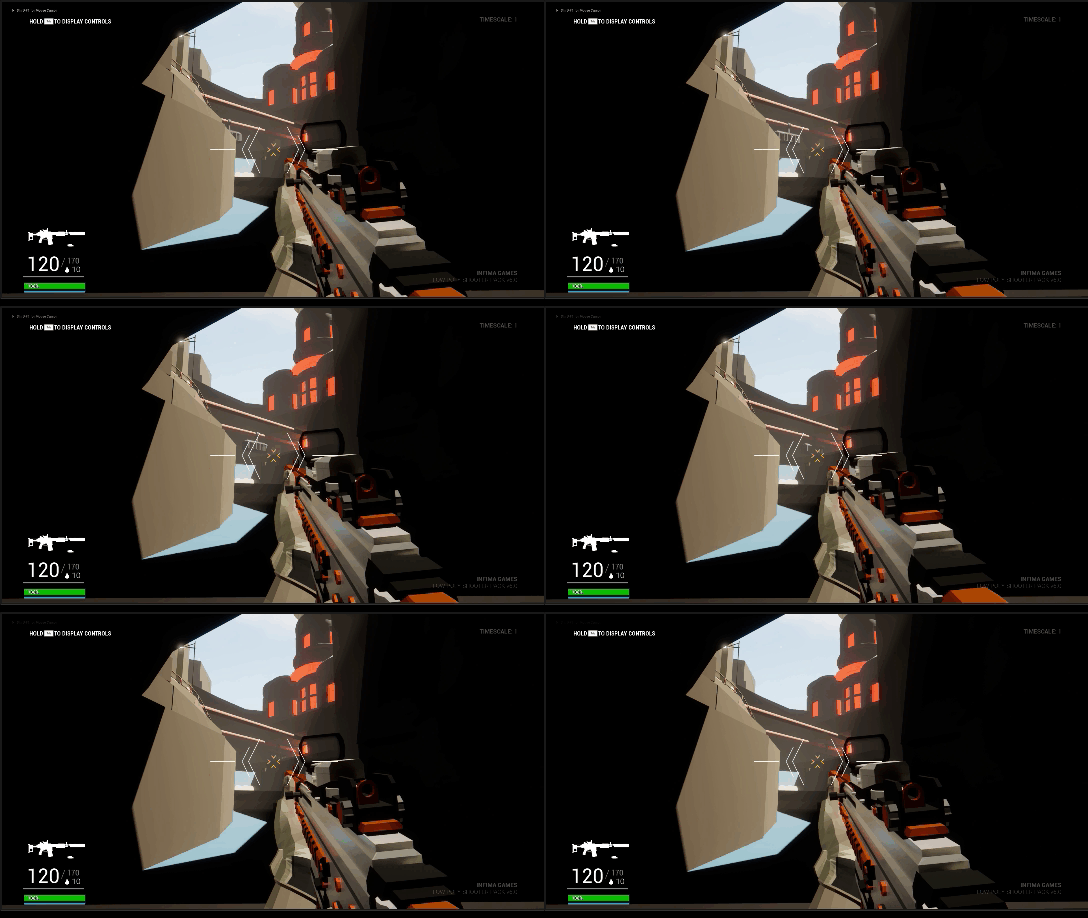
ESTABLISHING SHOT
At the start of the level, the player will leave a cave and be introduced to the end goal, with hints on how to reach it via the tram.
COMBAT INTRUDUCTION
I wanted to introduce the combat slowly, so I gave the player a vantage point to preview the upcoming encounter. This allowed the player to plan and prioritize which enemies to attack first and from which angle.
In addition, I show how the elevator works that the player needs to take to progress.
When creating this area, I wanted to give the player a sense of how combat would feel and how they could use the environment to attack and flank the enemy.
I also incorporated a circular cover design that gives the player more agency and allows them to maneuver around it to gain better angles.

ACT 2 - ELEVATOR
1. Elevetor
2. Cave
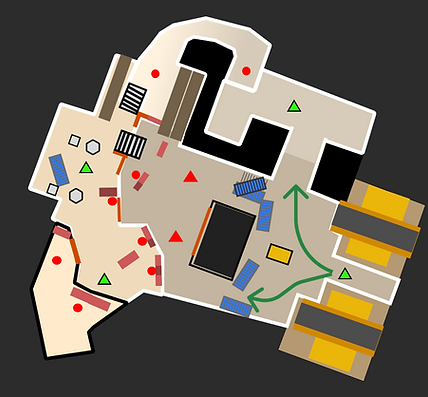

PLACING THE PLAYER IN A DISADVANTAGE POSTION
After the player had gained some combat experience, I wanted to up the difficulty. I did that by.
-
Placing the enemies on high ground.
-
having a no-man's land between the player and the enemies.
-
Having a tank enemy rush the player.
I also made the sight lines short for the player by placing high cover. If the player wants to attack the enemies head-on, they will have to reveal themself, putting themselves at a significant risk.
I use composition rules to point the player towards the cave section,
-
Sign posting with the arrows
-
The red color pushes the player towards the door that they can use to flank the enemies.
-
I used leading lines to point the player to the right location

SMALL COMBAT AREA

When designing this area, I wanted to highlight one of the tank enemies' weaknesses while also peaking in tension.
The tank enemy rushes the player but, due to their low stamina, is often left exposed, making them easy to eliminate.
After a hectic battle, I wanted to release tension by having the player take a tram ride towards the Mine area.
This ride gives the player time to heal and reload in peace, without worrying about enemies, helping avoid gameplay fatigue. It also builds anticipation for what's coming next.
ACT 3 - Drill
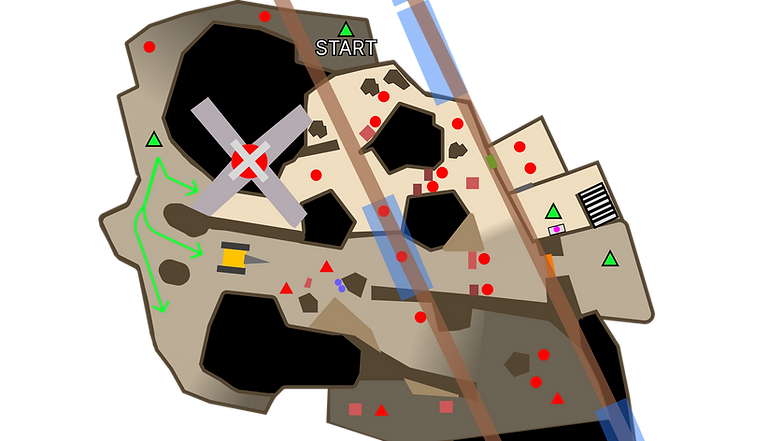.png)
1. Objective Drill

2. Reach the factory
PUSH OBJECTED COMBAT EVENT


Combat space
I wanted to break up the gameplay loop by introducing a push objective.
My idea was to have a dynamic cover that the player can use as a platform to reach vantage points while also providing cover. I built the surrounding area and combat around this mechanic,
In addition, I wanted to create a more open space with better sightlines while pushing the player to explore alternative paths and to dedicate themselves to their chosen path.
3 PATHWAYS
SHORT

LONG
JUMP
When designing each path, I wanted to compile all the players' learning into a single section. Each path has its strengths and weaknesses.
-
Short: For players who want to go for a safer approach, short offers a lot of cover and high ground to shoot enemies from.
-
Long: For players who want to go straight for the objective, the most risky path, but using the drill as cover and making sure not to peak too much can allow for an effective playstyle.
-
Jump: The player will be forced to jump; the path is mostly isolated from the 2 other two paths, though, with the disadvantage of being on low ground. But if the player makes the jump, they can get the enemies in a great chokepoint to eliminate them.


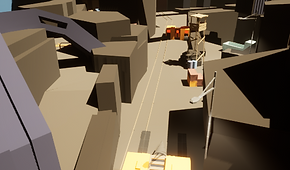
BEHIND THE SCENE

I started the whole project by creating a gym level where I tested and changed certain aspects of the template; for example,
-
Player Jump Height: I tried to replicate the metrics of the double jump in Call of Duty Advanced Warfare.
-
Weapon - I changed the weapon data table to allow for more ammunition and higher damage.
-
Adding a new enemy: I created the tank enemy by scaling the grunt enemy and giving it more health and stamina.
In the next step, I started creating muck-up combat scenarios, experimenting with different ways a combat area could look and play.
1. GATHER REFERENCES
When I gathered references, I already had an idea of each area and its gameplay mechanics.
I used Google and Pinterest to find images that fit my idea and provided a visual context for what I was creating.
2. CREATE FLOWCHART
When creating my flowchart, I considered how to influence the level's pacing and tension.
I also went through the order in which I wanted the player to experience certain events.

.jpg)

ITTERATING & FEEDBACK ON THE COMBAT SPACES

V1 MINE

V4 MINE
Feedback:
Improve the balance between enemies and paths while also highlighting the end objective more prominently.
The Testers liked this area; they thought the push objective was a nice change to the level's flow and that the area's size was great for the type of fast-paced gameplay.
Itteration
Improved balancing of the number of enemies
Made Short feel more interesting by adding more jump covers.
Updated the appearance of the last building to be more grand with the help of hierarchical design.
Feedback:
The area felt difficult to navigate and not fun to play. Too much cover and the flow felt off.
Iteration:
The elevator area went through the most iterations, and for good reason. The area struggled with the flow and balancing, and had to be changed a lot for it to feel good.
I started making a lot of changes, keeping what was good and changing what was bad. I started by making it clear where the player needs to go and by changing the combat pacing to make it feel more impactful. Later testing showed a much greater opinion with people saying that it felt more interesting to play.
4.png)
V1 Elevetor

V6 Elevetor

V1 Start
Feedback:
The initial feedback centered around the fact that the area didn't really feel fun to play and could be more interesting if I expanded it.
Iteration:
In this stage, I thought a lot about what I could add. I decided to create a dock area while also showcasing how the drill works.
V5 Start
REFLECTION
The Lessons
I learned a lot during this project, and it taught me so many valuable lessons. The biggest lesson I learned was around iteration. I feel that during this project, some aspects didn't get the attention they needed, which is due to my not planning well enough. I also learned to be happy with an area without trying to perfect it. This was the biggest one to me to let go when i feel it has hade enough attention.
Summery
I believe that large projects like this have taught me so much about time management and iteration, and I'm so glad it did. I later projects i have gotten a better understanding of scale and what phaces an combat area goes trough and the time it takes to itterate on it. All in all, I'm proud that I managed to finish it, but I still feel there are aspects that can be improved.
Thank you so much for reading, and I wish you a great day!